LINECAM® · TENSIONING THE LINE000%
THE SYSTEM

A camera
that goes
where nothing else can.

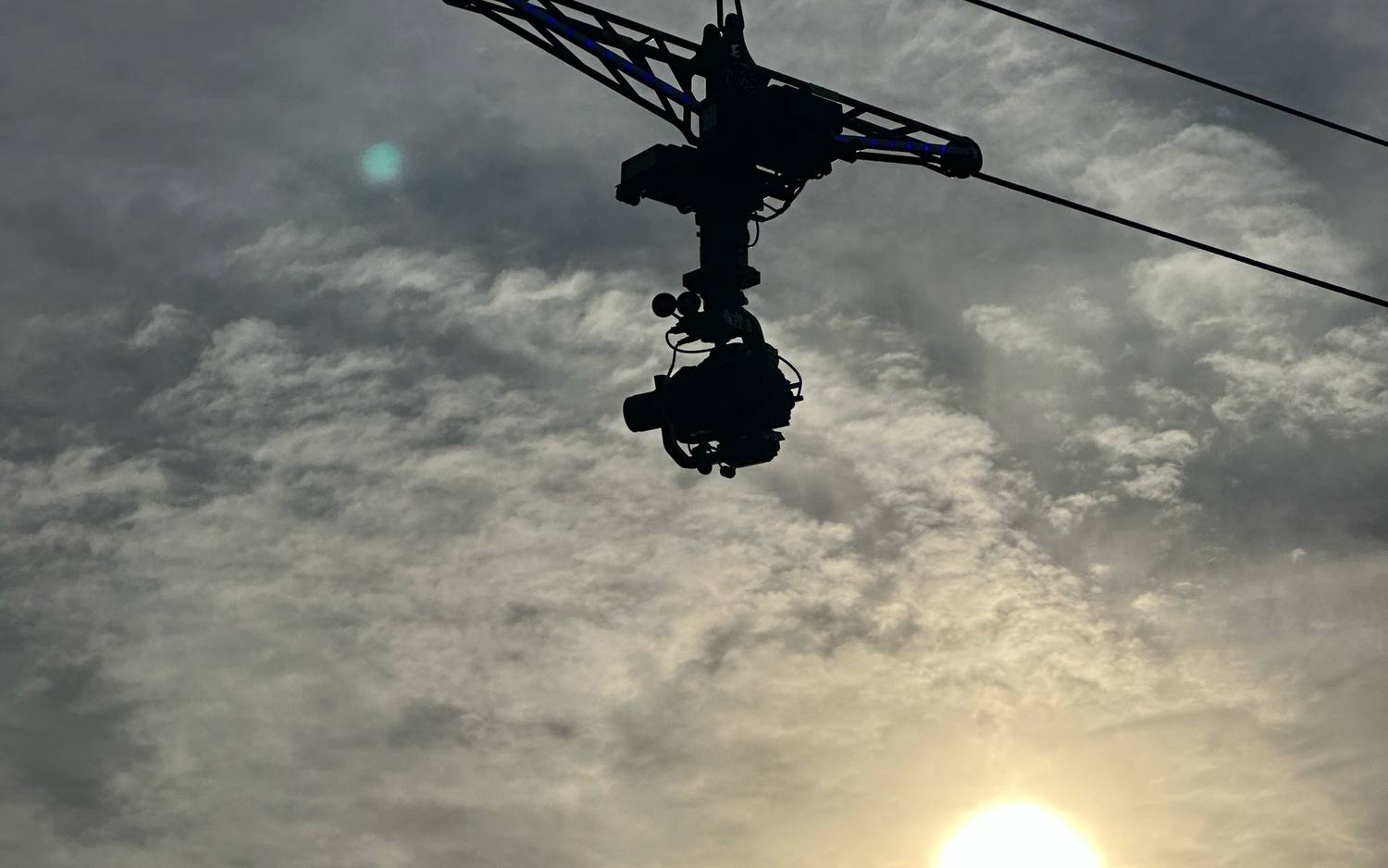
A cablecam is a camera suspended from a tensioned line that travels across the venue on a fixed, repeatable path. It doesn't fly: it travels. That's why it can pass over the audience, work under a roof and deliver the same move take after take.

DOUBLE LINE200 M40 KM/H4 KG PAYLOADSELF-POWERED
Linecam cablecam dolly hanging from the running line, silhouetted against the sky
THE SYSTEM

High-tenacity polyester rope, not steel cable. And always two lines.

THE DOLLY ON THE LINE
THE SYSTEM

High-tenacity
rope, not steel
cable.

Running line and safety line, always both. A self-powered dolly that needs no power supply at the anchors and repeats the same path take after take.

The system is documented in our own certificate, issued by ASNUTEC S.L.U. as manufacturer and signed by our technical manager. We hand it to the technical management of any venue that asks for it, always, before rigging.

OWN CERTIFICATEDOUBLE LINEREPORT FOR EACH VENUE
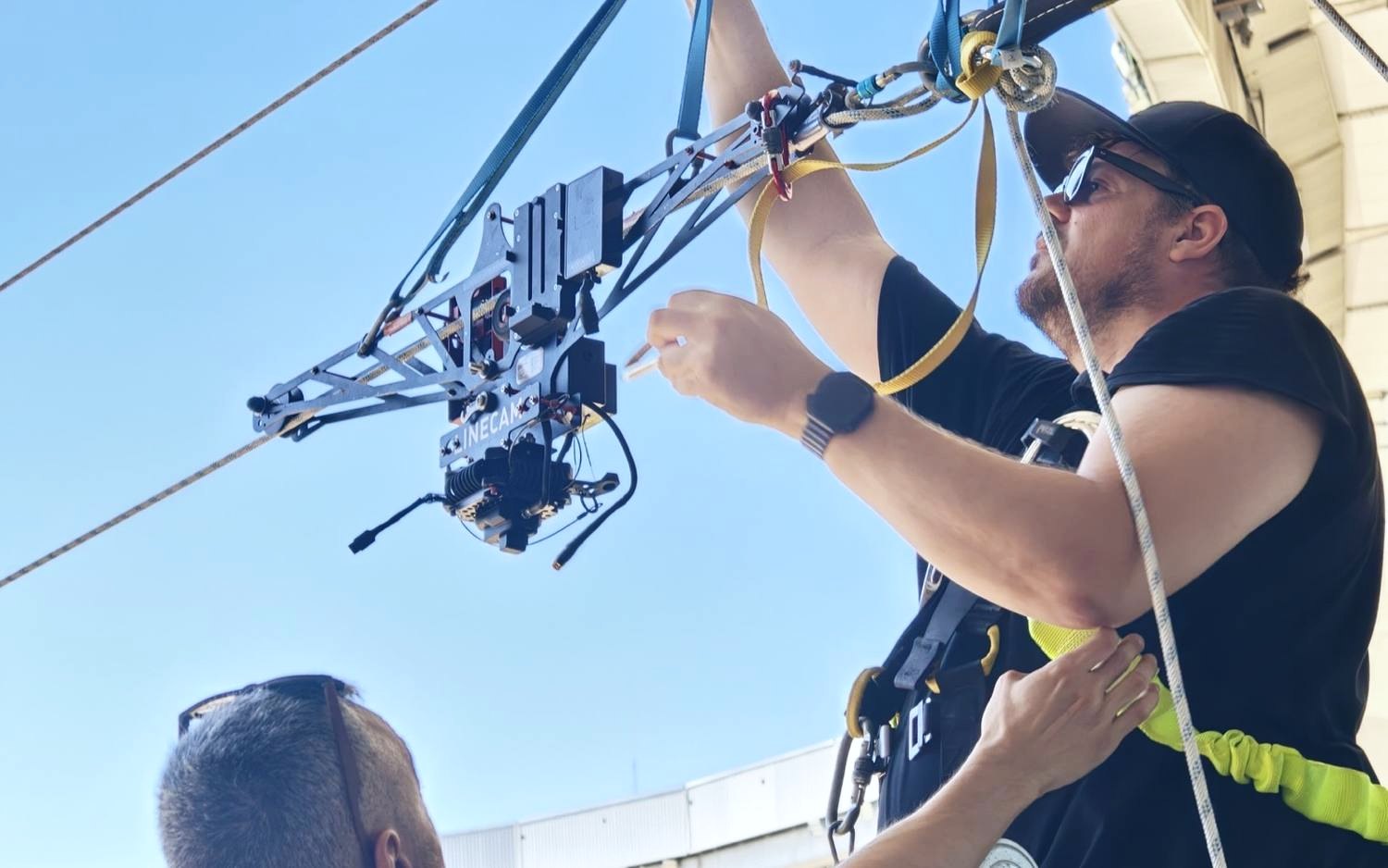
Linecam technical crew mounting the cablecam dolly on the line before the showREC · 4K

RIGGING THE LINE

CABLECAM VS. DRONE

When to use one, when to use the other.

They don't compete: they complement each other. This is what each does best.

CABLECAM

Over the audience and under a roof

It passes over people without the flight restrictions of an aircraft, works indoors, isn't affected by wind and repeats the same path as many times as needed. It's the tool for live shows: predictable, easy to integrate into the production and silent where it matters.

Read more about Over the audience and under a roof
DRONE

Scale, height and context

It gives the overall view of the venue, a height no line can reach and freedom of movement outdoors. It needs permits, a licensed pilot and suitable wind conditions, but it delivers shots a cablecam can't.

Read more about Scale, height and context
TOGETHER

The combination we use

At most of our festivals we rig both: the drone opens and closes, the cablecam lives inside the show. Because they're in the same production, they share tally and intercom and never get in each other's way.

Read more about The combination we use
RIGGING

How a line is installed.

Six steps we never skip, even if the span is thirty metres and we know the venue by heart.

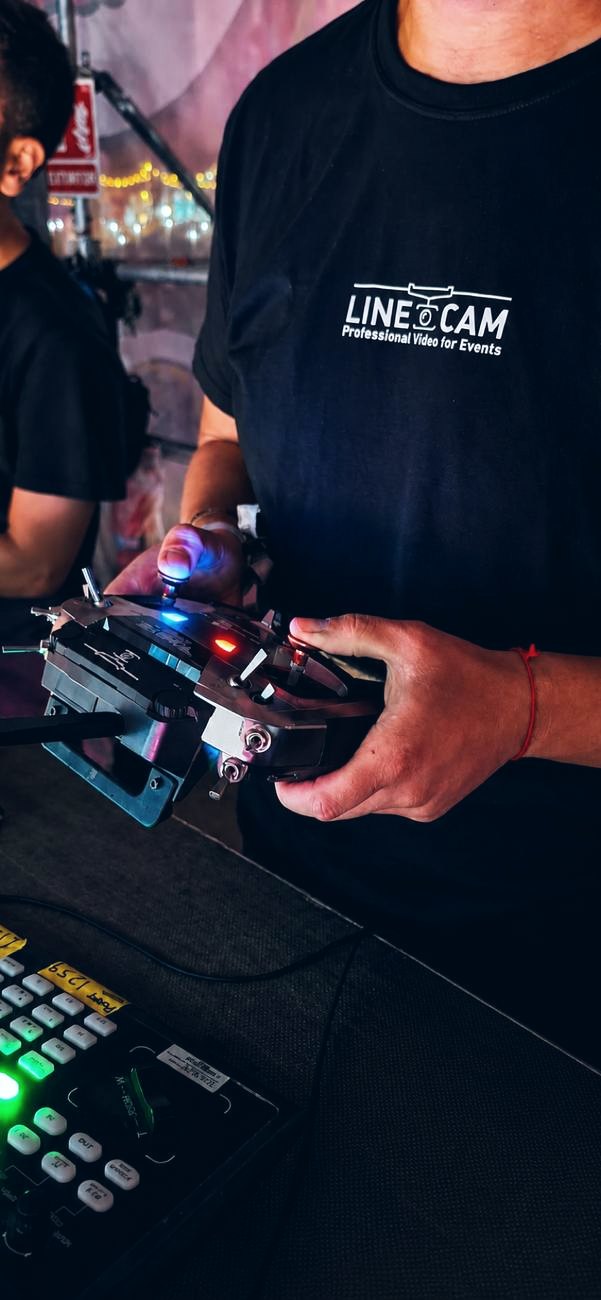
Linecam operator using the cablecam controller during a live showREC · 4K

THE CABLECAM CONTROLLER

  1. Site visit. We look at the venue, locate real anchor points and measure the span. If the venue allows it, we go up to check the structure.
  2. Report for the technical management. We document anchors, loads, slinging method and path. Nothing is rigged without that approval.
  3. Rigging both lines. A 10 mm running line and an 8 mm safety line. Tensioned to a working load of 250 kg, checked with a dynamometer.
  4. Dry runs. Full runs without the camera, checking clearances, sightlines and points of conflict with lighting and structures.
  5. Integration into the live production. Tally, intercom and video output to the control room. From here on the cablecam is just another camera in the plan.
  6. De-rigging and inspection. Equipment check and logging of line hours for system maintenance.
THE SYSTEM

Rigging, the line and passes over the crowd.

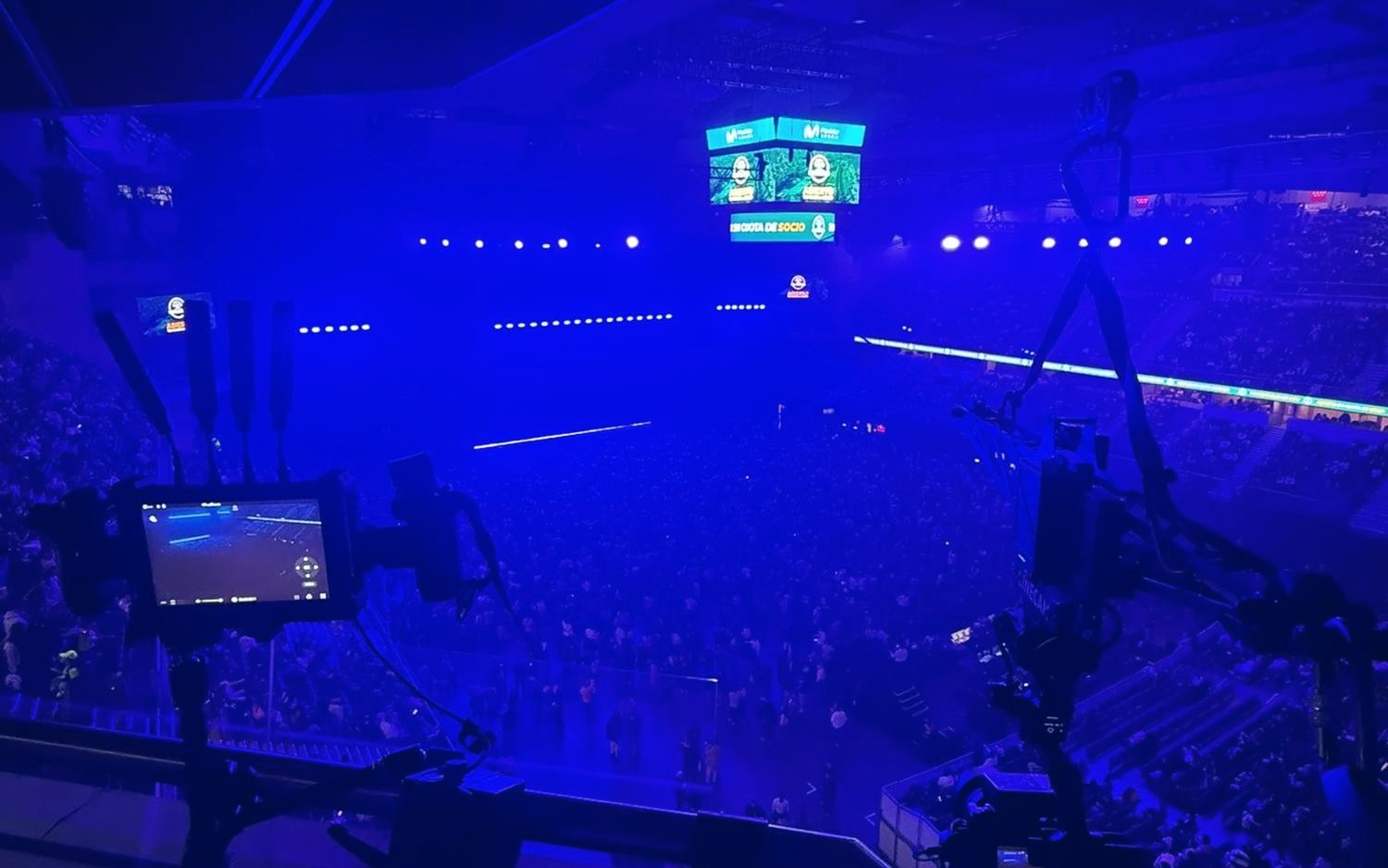
Linecam live production in an indoor arena, where a drone can't flyREC · 4K
INDOORS · WHERE DRONES CAN'T FLY
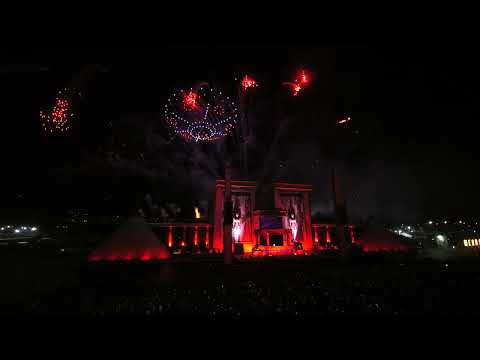
Linecam cablecam flying over the main stage of an open-air music festivalREC · 4K
CABLECAM OVER THE MAIN STAGE
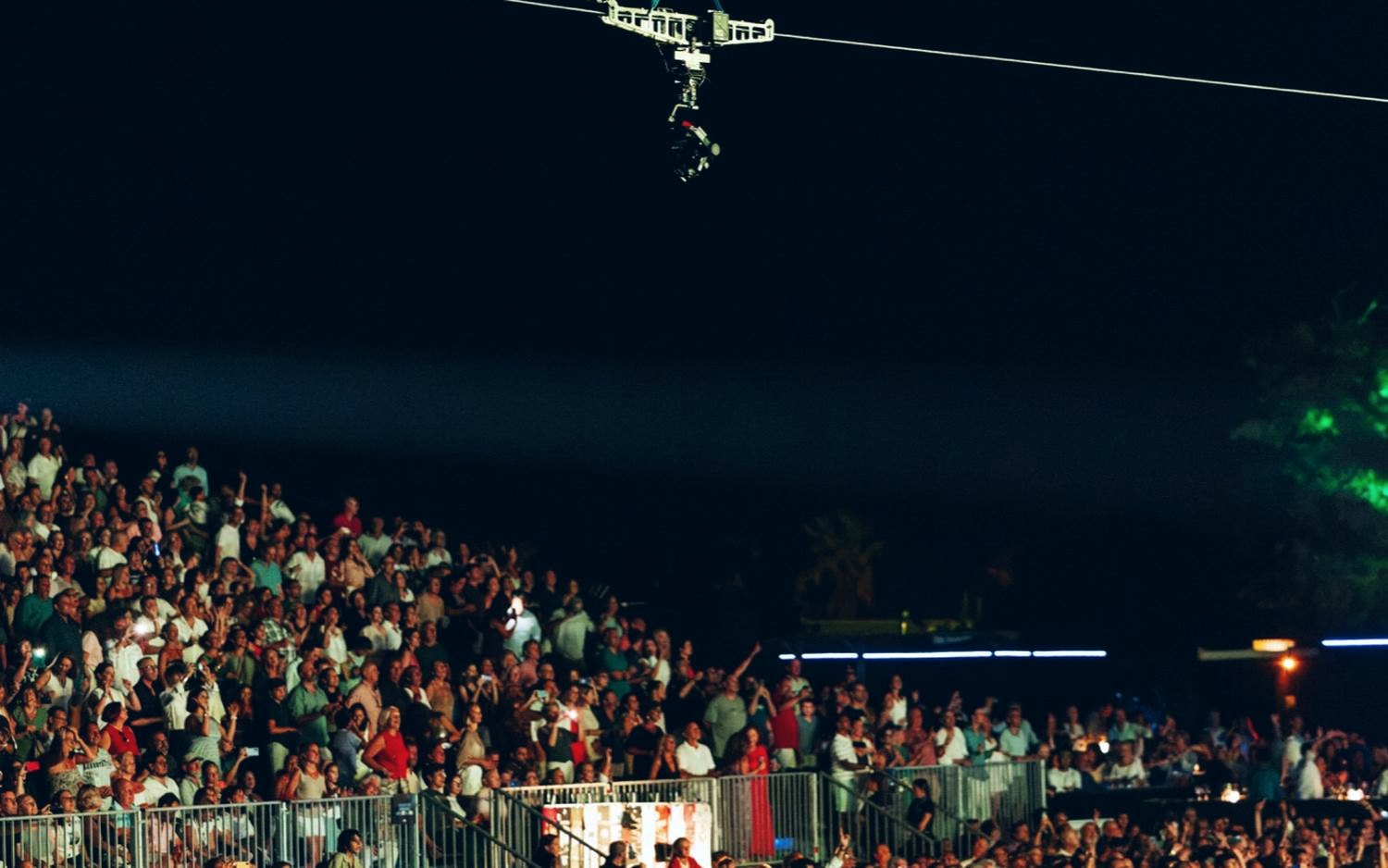
Linecam cablecam crossing above the crowd at a night concert with stage lightsREC · 4K
PASS OVER THE CROWD
TRACKING SHOT

Cablecam in action

QUESTIONS

All about the cablecam

Not answered here? Call us on +34 622 290 586 or email info@linecam.es.

Does the cablecam run on steel cable?

No. The Linecam® system runs on high-tenacity polyester rope: 10 mm for the running line and 8 mm for the safety line. It's lighter to transport and rig, doesn't damage the venue structure and its breaking load —2,100 kg for the 10 mm rope— is far above the 250 kg working tension.

What is the maximum span?

250 metres between anchors with the secured system. On long spans we raise the working tension to 350 kg. Beyond that distance we work with a specific installation and prior calculations.

How fast does it move?

From 10 cm/s for an almost imperceptible move up to 40 km/h for a fast pass over the crowd. Acceleration is controlled from the operator position; it isn't a fixed speed.

What incline can the line take?

Up to 30°, which allows descending rigs from the stands to the stage or from a PA tower to the floor.

Do you need power at the anchor points?

No. The dolly is self-powered with two onboard DJI TB50 batteries. This greatly simplifies rigging at open-air venues and in high stands.

What camera can it carry?

Up to 4 kg of payload, covering everything from a Sony FX3 with lens, focus motors and transmission to lightweight broadcast configurations. The dolly weighs 9.5 kg ready to run and takes a maximum of 19 kg on the line.

Do you provide documentation to the venue?

Yes. Before rigging we give the technical management a report with the proposed anchor points, span, loads, slinging method and the line's path. The system also has its own certification issued by ASNUTEC S.L.U. as manufacturer.

Can it be rigged indoors?

Yes, and that's one of its most common uses. Sports halls, theatres, covered squares and arenas: where a drone can't fly, the cablecam can work.

CONTACT

Will a line fit in your venue?

Send us the venue name and the date. Within 24 h we'll tell you whether the installation is viable and what span we can rig.